

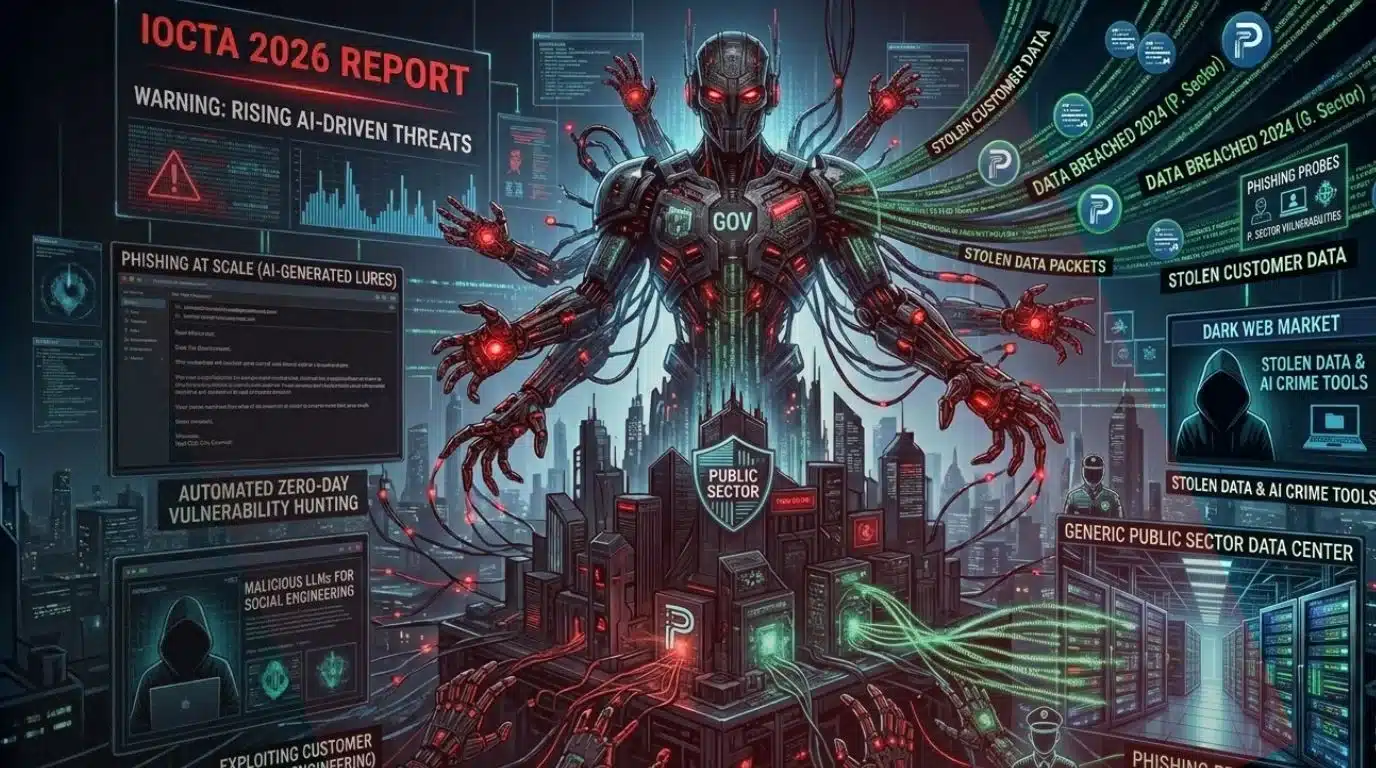
The IOCTA 2026 report released by Europol offers a detailed look at how cybercrime is evolving across Europe, with criminals increasingly using artificial intelligence, encryption, and cryptocurrencies to scale their operations. The latest edition of the Internet Organised Crime Threat Assessment outlines key trends shaping the threat landscape and calls for stronger coordination among law enforcement agencies.
According to the IOCTA 2026 report, cybercrime is becoming more complex and interconnected, driven by rapid technological advancements. The findings highlight how criminals are adapting quickly, making it harder for authorities to detect, track, and disrupt their activities.
IOCTA 2026 Report Maps Evolving Cyber Threat Landscape
The IOCTA 2026 report serves as a roadmap for understanding emerging cyber threats, covering areas such as online fraud, ransomware attacks, and child exploitation networks. Edvardas Šileris, Head of the European Cybercrime Centre at Europol, emphasized that the report is intended to help law enforcement agencies respond effectively to these evolving risks.
He noted that as cybercriminals continue to exploit new technologies, strengthening capabilities and improving collaboration will be essential to protect citizens and critical infrastructure.
Dark Web Fragmentation and Cryptocurrencies Fuel Crime
A key finding in the IOCTA 2026 report is the continued role of the dark web as a central hub for cybercriminal activity. Despite ongoing crackdowns, marketplaces and forums remain active, with criminals frequently shifting platforms to avoid detection.
The report highlights how fragmentation and specialization across these platforms make investigations more difficult. Encrypted messaging services and anonymized networks are increasingly connecting surface and dark web environments, reducing the visibility of criminal operations.

Cryptocurrencies also play a significant role, according to the IOCTA 2026 report. Privacy-focused coins and offshore exchanges are widely used to launder ransomware payments, making financial tracking more challenging. The report also points to a growing trend of younger individuals becoming involved in cryptocurrency-related activities, sometimes without understanding the legal risks.
AI-Driven Fraud Expands Across Europe
The IOCTA 2026 report identifies artificial intelligence as a major driver of online fraud. Cybercriminals are using generative AI tools to create highly targeted phishing campaigns and social engineering attacks.
These tools allow attackers to:
- Personalize fraudulent messages at scale
- Mimic legitimate communication styles
- Automate large-scale scam operations
The report also highlights the use of caller ID spoofing and SIM farms, which enable attackers to send thousands of messages or calls simultaneously. This combination of AI and automation is increasing both the reach and success rate of fraud campaigns.
Ransomware and Data Extortion Remain Key Threats
Ransomware continues to be a dominant threat, as outlined in the IOCTA 2026 report. A large number of active ransomware groups were observed throughout 2025, with many adopting data extortion tactics.
Instead of relying solely on encryption, attackers are increasingly threatening to release stolen data to pressure victims into paying. This shift has made cyberattacks more damaging, particularly for public institutions and large organizations.
The report also notes growing links between state-sponsored actors and criminal groups, with some cybercriminals acting as proxies in broader geopolitical strategies. Emerging hacking coalitions are adding another layer of complexity to the threat landscape.
Rise in Online Child Exploitation and Criminal Networks
The IOCTA 2026 report highlights a concerning increase in online child sexual exploitation cases. The financial trade of child abuse material is growing, and the use of synthetic content is creating new challenges for investigators.
Encrypted messaging platforms are widely used by offenders, making it harder for authorities to monitor and intervene. The report also points to the emergence of organized online communities that engage in multiple forms of criminal activity.
These networks combine cybercrime with violent offenses, creating a complex and dangerous ecosystem that extends beyond digital spaces.
Need for Stronger Law Enforcement Collaboration
The findings of the IOCTA 2026 report reinforce the need for improved coordination between governments, law enforcement agencies, and industry stakeholders. As cyber threats become more advanced, isolated efforts are no longer sufficient.
The report provides actionable insights and recommendations aimed at strengthening investigative capabilities and improving response strategies. It also stresses the importance of innovation in tackling new forms of cybercrime.
