

editorially independent. We may make money when you click on links
to our partners.
Learn More
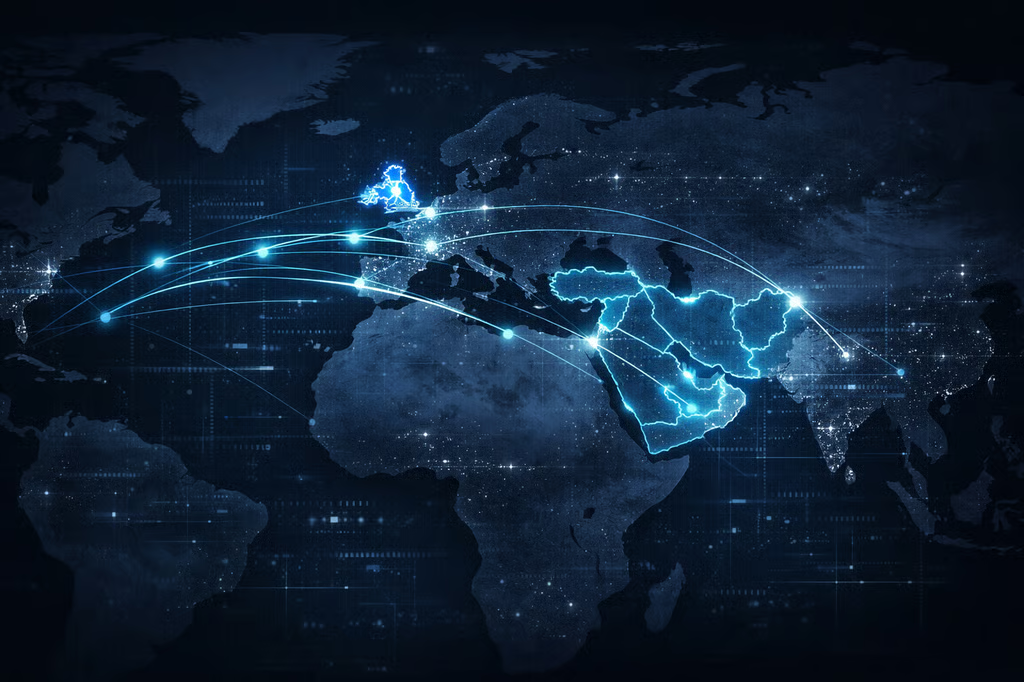
The United Kingdom’s National Cyber Security Centre (NCSC) is urging British organizations to brace for potential Iranian-linked cyber activity as tensions escalate in the Middle East.
While officials say there is no confirmed spike in direct attacks against the UK, they caution that the situation could shift rapidly.
“There is almost certainly a heightened risk of indirect cyber threat for those organisations and entities who have a presence, or supply chains, in the Middle East,” said NCSC in its notice.
“CrowdStrike has observed a surge in claimed activity from Iran-aligned and sympathetic hacktivist groups,” said Adam Meyers, Head of Counter Adversary Operations at CrowdStrike in an email to eSecurityPlanet.
He added, “At this stage, much of the activity being publicized appears to be claim-driven rather than evidence-backed.”
Adam explained, “It’s common during periods of geopolitical escalation to see an increase in opportunistic hacktivism and low-level disruptive activity designed to generate attention.”
Geopolitical Instability and UK Cyber Risk
In its latest alert, the UK’s National Cyber Security Centre (NCSC) cautioned that organizations with operations, assets, or supply chain dependencies in the Middle East face an elevated risk of indirect cyber impacts amid ongoing regional tensions.
While the agency stated that it does not currently assess a major shift in the direct cyber threat from Iran to the UK at this time, it stressed that the geopolitical situation remains fluid and could change quickly.
The warning is particularly relevant for multinational enterprises, critical national infrastructure (CNI) providers, and organizations that rely on regional logistics firms, technology vendors, or managed service providers.
Even if a UK-based company is not directly targeted, cyber incidents affecting partners or service platforms in the region could create cascading operational disruptions.
Although Iran is reportedly experiencing widespread domestic internet restrictions imposed by its own government, the NCSC assessed that Iranian state-sponsored and affiliated threat actors are likely to retain operational capability.
Historically, Iran-linked threat actor groups have conducted distributed denial-of-service (DDoS) attacks, credential-focused phishing campaigns, and activity targeting industrial control systems (ICS).
In periods of geopolitical tension, such operations may involve both formal state-sponsored actors and loosely affiliated hacktivist groups aligned with broader political narratives.
The advisory reflects a precautionary stance based on the understanding that geopolitical instability frequently correlates with opportunistic cyber activity.
Mitigating Cyber Risk Amid Global Conflict
Periods of geopolitical tension often require organizations to reassess their cyber readiness, even in the absence of a specific, active exploit.
- Review and strengthen DDoS protections, including properly configured traffic filtering, rate limiting, and web application firewall rules.
- Reinforce phishing and credential security by enforcing MFA, tightening email authentication controls (SPF, DKIM, DMARC), and increasing employee awareness.
- Reduce external attack surface by auditing internet-facing assets, closing unused ports, disabling unnecessary services, and conducting vulnerability scanning and patch validation.
- Increase monitoring and detection capabilities across endpoints, networks, and cloud environments, with heightened focus on anomalous behavior and third-party connections in higher-risk regions.
- Segment critical systems using zero trust and least-privilege principles, particularly protecting ICS and OT environments from lateral movement.
- Strengthen supply chain oversight by reassessing third-party risk, validating third-party incident readiness, and monitoring for brand impersonation or data exposure activity.
- Test incident response and business continuity plans through tabletop exercises and backup restoration validation to ensure rapid containment and recovery during heightened threat periods.
Collectively, these measures help organizations improve resilience, limit potential disruption, and respond more effectively during periods of elevated cyber risk.
Geopolitical Tensions Raise Cyber Risk
While there is no confirmed surge in direct attacks against UK organizations, the NCSC’s advisory reflects a broader reality: geopolitical tensions often create conditions for opportunistic cyber activity, indirect supply chain disruption, and hacktivist-driven campaigns.
For businesses with regional ties or third-party dependencies in the Middle East, preparedness now may help prevent operational impact later.
This intersection of geopolitics and cybersecurity risk is prompting organizations to explore zero trust solutions that reduce reliance on implicit trust.
