



JR Raphael, Foundry
In Google’s Android system settings, you’ve got the option to turn dark mode on or off entirely, as you’d expect, and you also have the ability to set either a stable time-based schedule to switch it on and off at the same exact time each day or to automatically have it toggle on and off based on the sunset and sunrise, respectively, for wherever you are.
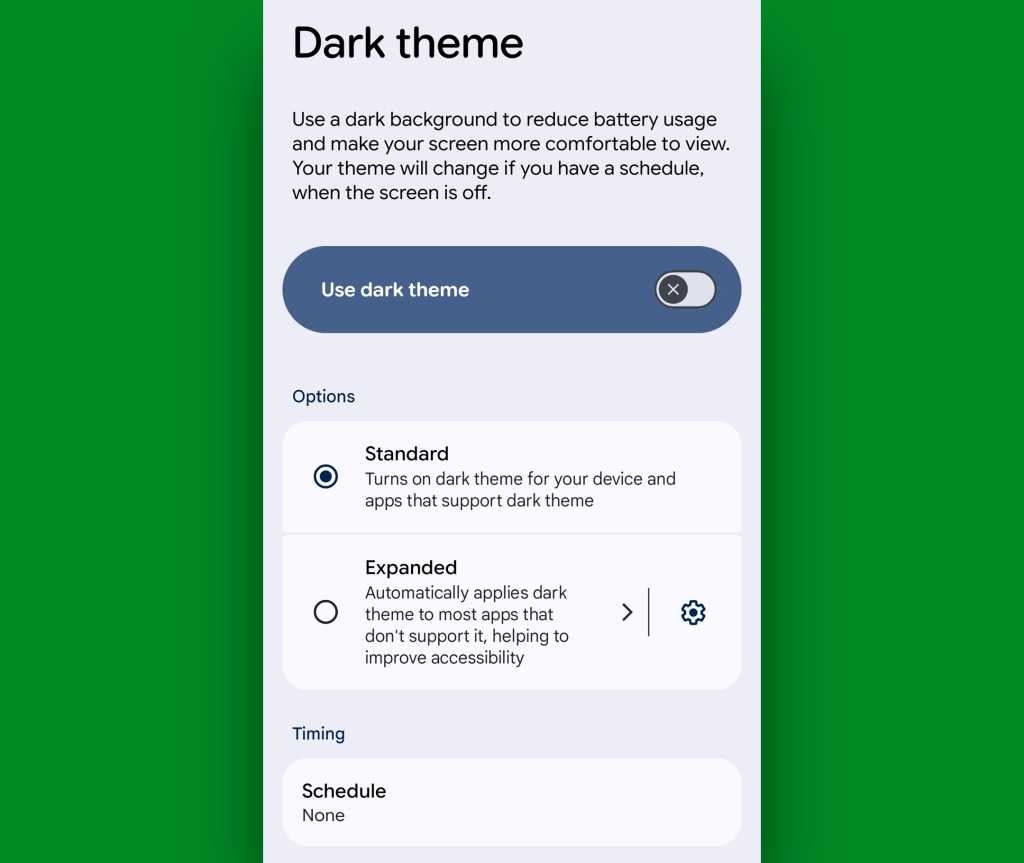
JR Raphael, Foundry
That’s all well and good, but if you don’t want to live in the dark all the time and would rather use dark mode as a selective state — seeing its dimmer, less glary approach when you’re in a dark room and your eyes are more sensitive to lighter colors but then sticking with the standard brighter interface style when you’re in a brighter environment — you don’t presently have any great way to predict that and make it happen in an intelligent way.
Sure, going with a set time schedule or the sunset-sunrise pattern is kinda-sorta close…ish. But in our electricity-aided, post-caveman era, just because it’s the evening hours or the sun has set doesn’t necessarily mean you’re in a dark place. So rather than relying on these mostly meaningless measures, shouldn’t Android’s dark mode be able to detect the level of light around you and activate dark mode for you when you’re actually in a dim environment, if you’d like — then disable it and stick with the standard light interface when you aren’t?
