


Multiple SoundCloud users are reporting that the platform is currently blocking access when used with VPNs, displaying a “403 ERROR – The request could not be satisfied” message.
The error, served through Amazon CloudFront, has left many unable to access their accounts or listen to music, especially in regions where SoundCloud is otherwise restricted. However, a recent update from SoundCloud suggests this may not be an intentional block, but rather a temporary configuration issue.
Reports of the issue began surfacing on December 14, 2025, on Reddit. A SoundCloud user with over a decade of experience on the platform explained that VPN access is essential in their country due to government censorship. With VPN and proxy traffic now returning 403 errors, they are completely locked out of the platform.
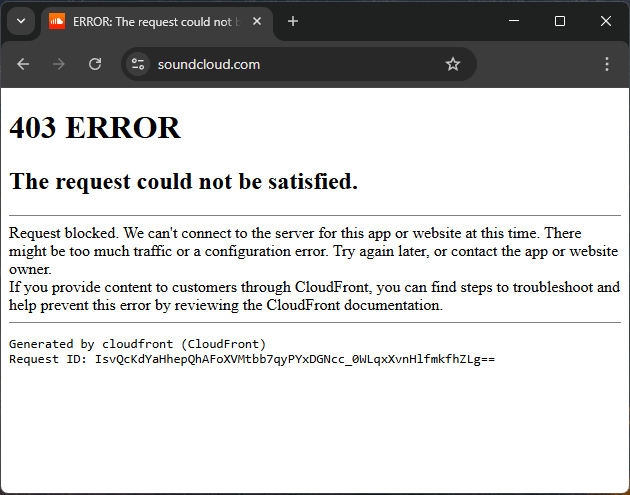
The error page served by CloudFront typically points to blocked traffic or misconfigured security settings, and users speculated that SoundCloud may have updated its backend to filter known VPN IP ranges. Some noted that only certain VPN providers and regions are affected, suggesting selective blocking or the use of a reputation-based IP blacklist.
However, in a post on its official X (Twitter) account, SoundCloud addressed the issue, pointing to this being likely a misconfiguration.
This message indicates that the issue may not be a deliberate attempt to block VPN traffic, but instead the result of a technical error or misconfiguration, possibly an overzealous WAF (Web Application Firewall) or content delivery rule triggered on CloudFront.
In a statement to CyberInsider, SoundCloud clarified that: “Some configuration changes have caused some users on VPNs to experience temporary connectivity issues. We are actively working to resolve these access issues.”
SoundCloud, based in Berlin and known as a key platform for independent artists and audio creators, has historically been accessible globally, though some countries restrict access through national firewalls. For users in those regions, VPNs are often the only viable path to the service. As a result, even temporary blocks can disproportionately affect users who rely on circumvention tools to access content.
Technical analysis from users indicates that connections from certain VPN servers, particularly from popular providers and virtual private servers (VPS), are being denied, while others still work intermittently. One user reported that three of their four private servers were blocked, while another noted that switching to a residential IP-based VPN resolved the issue.
If you liked this article, be sure to follow us on X/Twitter and also LinkedIn for more exclusive content.
