

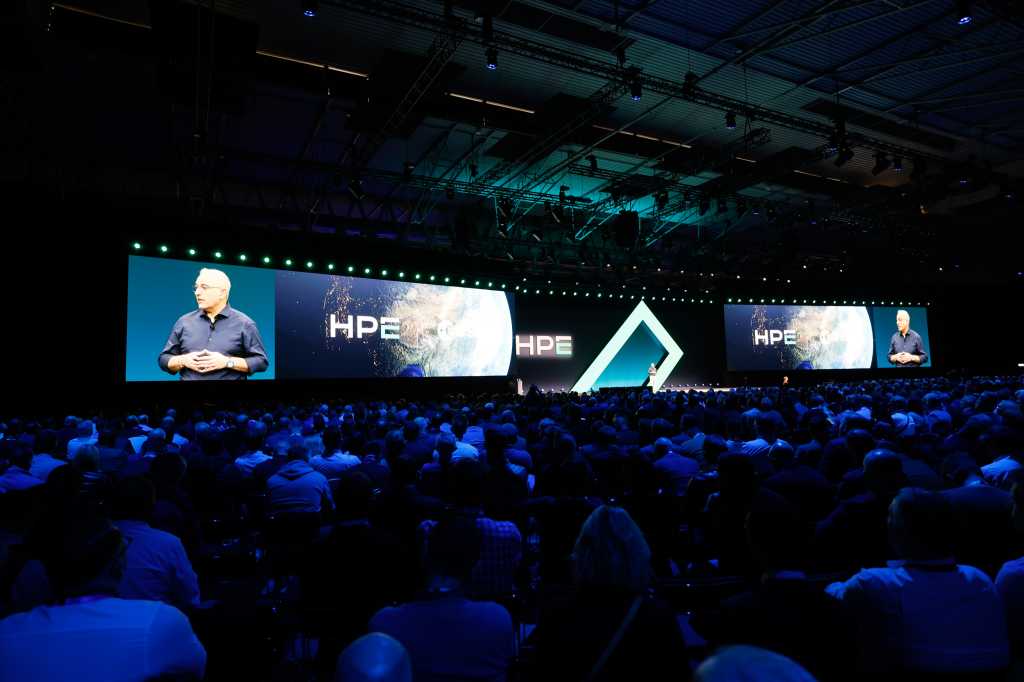
“Rami’s intention and mine has always been to create a new leader in networking,” the HPE CEO said. Neri noted that just five months after the Juniper purchase, HPE is already offering connectivity solutions to the market that combine the technology of its one-time rival and that of its solutions from Aruba, which HP acquired in 2015. “In the future, you won’t notice what each other is doing. And the fact that we already support the underlying dual design is just a testament to how fast the teams are coming together and obviously also all the innovations, where HPE’s advantages are already being leveraged,” Neri added.
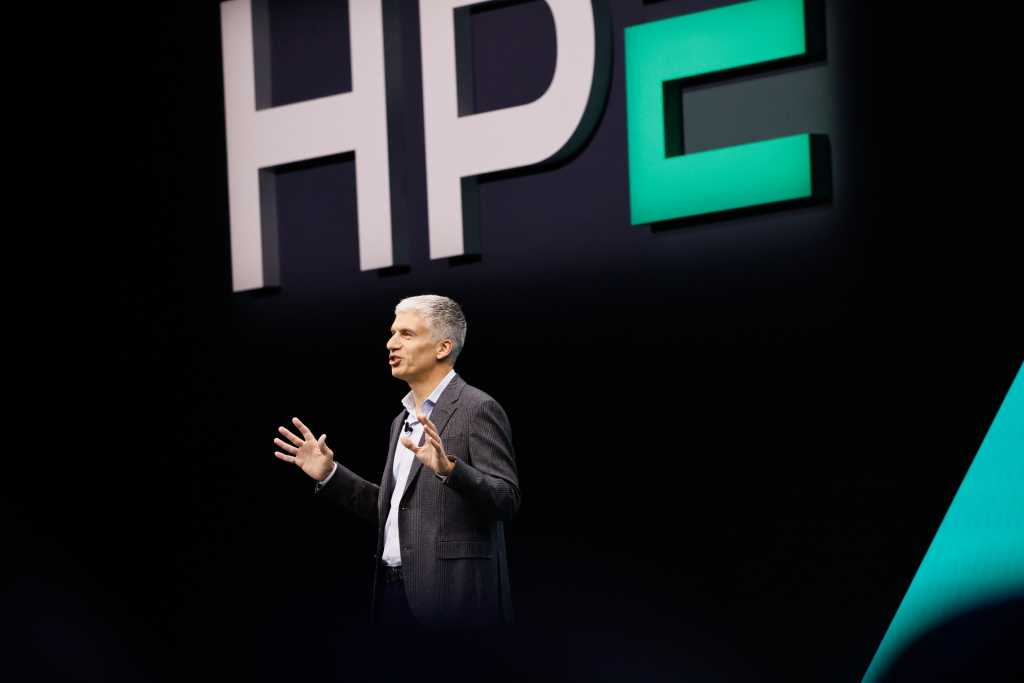
Rami Rahim, formerly CEO of Juniper Networks and now general manager of HPE’s networking business.
HPE.
HPE’s acquisition of Juniper, a complicated deal
HPE’s acquisition of Juniper, worth a whopping $14 billion, has not been a straightforward process but rather a complex and lengthy one. Announced in January 2024, the purchase was not completed until July 2025. Nor has it been free of controversy, especially in the United States, where the Department of Justice (DOJ) filed a lawsuit to block the purchase, alleging that the merger would reduce competition in the networking equipment market, specifically in the area of wireless local area networks (WLAN).
Asked by COMPUTERWORLD ESPAÑA about the difficulties that HPE has experienced in the approval of the operation and about the critical voices that still exist in the US regarding this merger, Neri recalled, first of all, that “the transaction was approved outside the United States within a normal period, I would say, of six months. In the summer of 2024, there were only three countries left to approve it, and two of these three would do so in the next three months.” What happened in the US, he added, “is that there was an election and a change of Administration, after which we went ahead with the process.”
In analyzing the case, Neri continued: “The U.S. Department of Justice felt that in the campus and branch office market, particularly in wireless, there were going to be two [players] instead of three; but the reality is that this market is seven or eight. If you look at the U.S., you have Cisco, Juniper, HPE, Cambium Networks, Ubiquity and Arista. They all compete in the market. And, depending on the industry, some are stronger than others; it’s also a different story if you’re talking about large enterprises or the public sector. The market share that many of you [journalists] report on supports that the market is large and that there is fragmentation.” In the end, he added, with the U.S. Department of Justice, “we went through a constructive process, which ultimately was best for both of us. We demonstrated that this revenue space is a pro-competitive environment. And I have to say, during the ‘two million process,’ which is the final step [to notify large mergers and acquisitions] in the U.S., we received no complaints from customers and none from competitors.”
AI and cloud in the spotlight
In Barcelona, Neri also highlighted the technological advances made in recent months by HPE in cloud and artificial intelligence, technologies that the executive sees as completely connected as “AI is the quintessential hybrid workload.” He defended Greenlake, the company’s hybrid cloud platform that was originally born as a pay-per-use model and which currently has 46,000 customers worldwide; there are plans to add AI innovations, such as the incorporation of a framework based on autonomous agents (Greenlake Intelligence), presented by HPE last June and which is designed to automate and simplify IT operations in hybrid cloud environments. “The future of IT operations simplification is here,” Neri noted.
Neri also highlighted the relevance of HPE’s Air-gapped Private Cloud proposition, especially in a highly regulated environment such as the EU, and particularly in strategic sectors where data is especially sensitive such as the military.
