

DuckDuckGo has expanded its Duck.ai platform with a new AI-powered photo-editing feature that lets users modify images while preserving anonymity.
The company says all image prompts are anonymized and never used to train underlying AI models, continuing its privacy-first approach to generative AI.
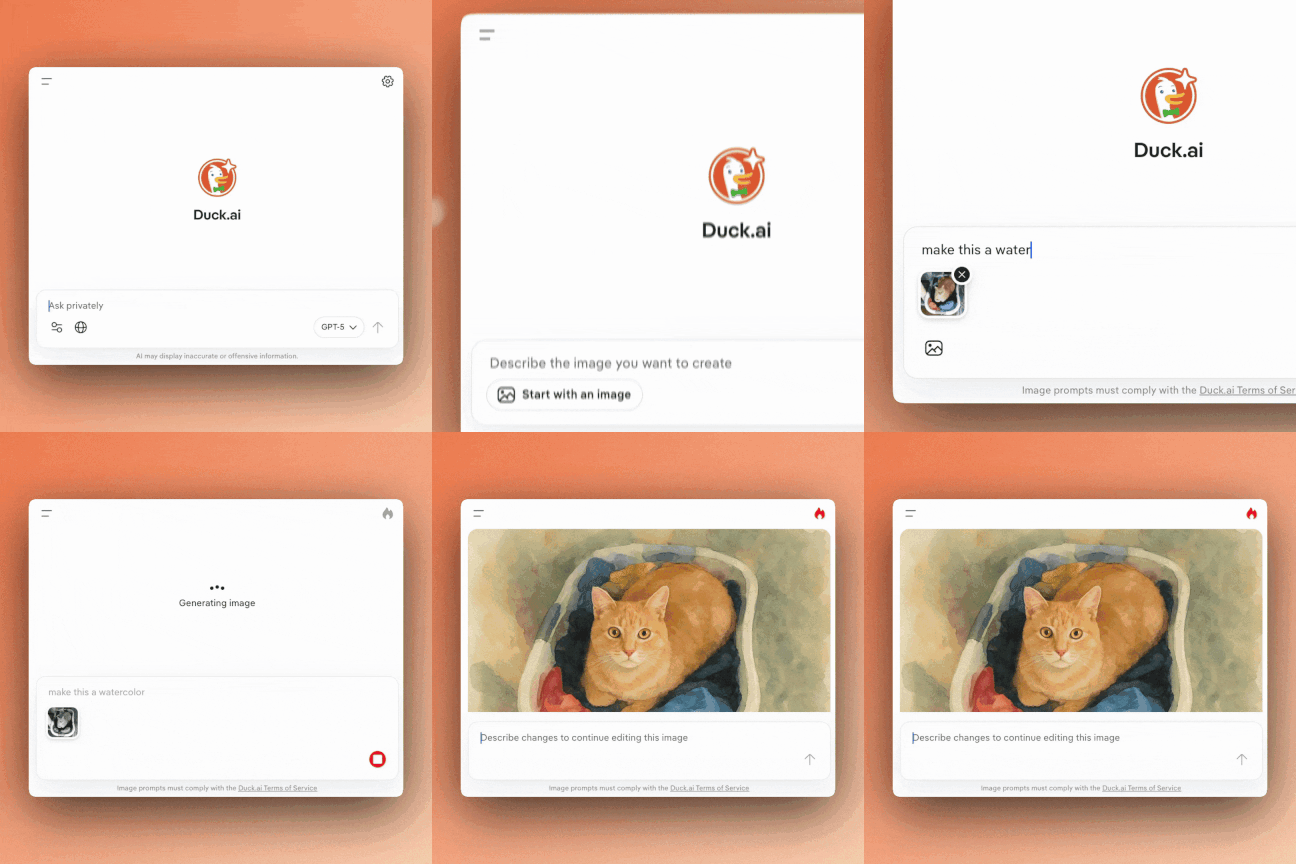
The announcement positions the update as an optional enhancement to Duck.ai’s existing text and voice capabilities. Users can now upload an existing image to the AI image generator and apply edits through natural language prompts. To access the feature, users select “New Image” and then “Start With An Image,” after which they can upload JPEG, JPG, PNG, or WebP files.
DuckDuckGo states that uploaded images are stored locally on the user’s device rather than on its servers. As with text and voice interactions on Duck.ai, the company removes metadata that may contain personal information, such as IP addresses, before forwarding prompts to third-party model providers. These providers currently include Anthropic, Azure OpenAI, OpenAI, Meta, and together.ai.
According to the Duck.ai Privacy Policy, DuckDuckGo does not store prompts or outputs on its own servers. By default, recent chats are saved locally in the user’s browser, unless the user opts out. Local chat history can be deleted individually, cleared using the platform’s “Fire Button,” or automatically removed after 30 conversations. Browser settings may also affect how long local data is retained.
Crucially, DuckDuckGo says it has contractual agreements with its model providers prohibiting them from using submitted prompts or generated outputs to train or improve their AI models. Providers are also required to delete any received data once it is no longer necessary to generate a response, and in most cases, within 30 days, except where limited retention is required for legal or safety compliance.
Founded in 2008, DuckDuckGo is best known for its privacy-focused search engine, which positions itself as an alternative to data-driven advertising platforms. The company has steadily expanded its product portfolio to include a privacy-centric browser, tracker blocking tools, subscription services, and, more recently, AI features through Duck.ai. Its approach contrasts with many mainstream AI services, which require account sign-ins and may use user data to improve their models.
The photo editing feature builds on DuckDuckGo’s recent rollout of real-time AI voice chat, which also routes audio through an encrypted relay and avoids storing recordings. In that implementation, voice data is streamed ephemerally and neither DuckDuckGo nor the model provider retains it after a session ends.
Duck.ai’s terms of service impose several usage restrictions on the new image capabilities. Prohibited uses include generating photorealistic images of real people without their consent, creating deepfakes or non-consensual intimate imagery, and producing illegal, harmful, or sexually explicit content. The service also blocks use in regulated or high-risk domains such as medical, financial, or legal advice, and includes safeguards designed to prevent misuse.
For users who prefer to avoid AI features altogether, DuckDuckGo also introduced a dedicated no-AI search interface at noai.duckduckgo.com. This version of the search engine removes AI-generated summaries, Duck.ai prompts, and related interface elements, while automatically applying the company’s AI image filter to search results.
If you liked this article, be sure to follow us on X/Twitter and also LinkedIn for more exclusive content.
