

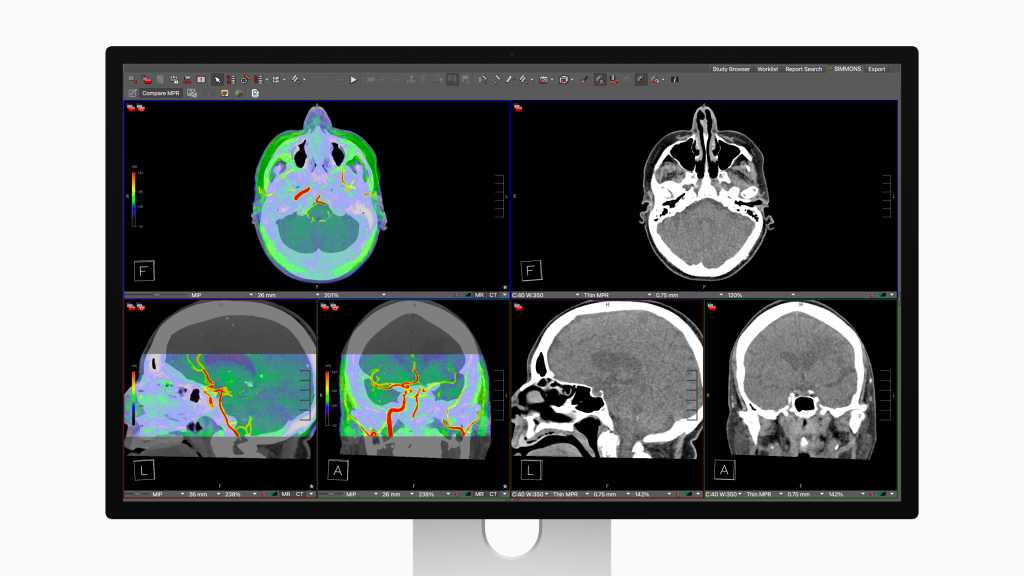

The combination means you don’t need a dedicated radiology workstation costing in excess of $15,000; you need only a Mac and a $2,899 Apple display.
Once those things are in place, you can select your choice of imaging software — probably something like Visage Imaging 7, OsiriX MD, Falcon MD, or another of the solutions available for Mac. Even better, while privacy and data confidentiality concerns do exist, the Mac you use for this work can also be used for other tasks, like any other Mac. This democratizes access to tools of this kind; gives the medical profession all the Apple advantages around product resilience, TCO, and tech support; cuts budgets; and enables medical tech purchasers to get more for less.
On-device AI, an Apple advantage
Then we get to think about AI, and that’s where Apple’s strategic sensibility seems to be coming into play. I see it like this: it is obvious that AI for medical imaging will need to run on something. And what Apple has done with Apple Silicon, its approach to on-device AI, and this new medical image calibration feature on its displays all mean it now offers a trusted, highly usable, incredibly flexible solution to run future AI-augmented MRI imaging packages. Apple’s processors can simply shrug their way through that kind of work, while its new displays can give radiologists and other medical examiners the precise accuracy they need.
