

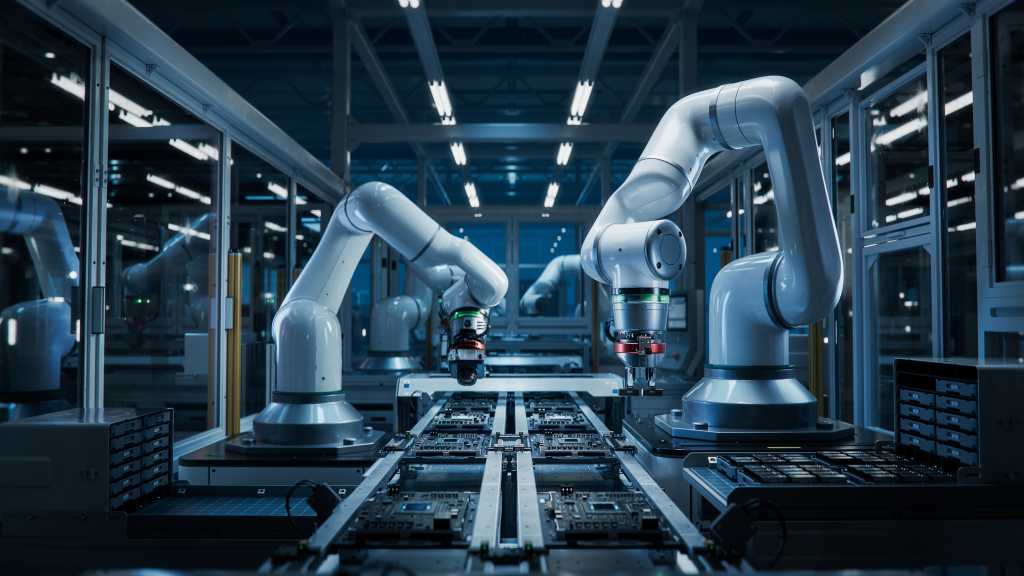

Physical AI refers to the concept of AI manifesting in physical form, most notably as robots, though others foresee broader real-world outcomes, such as AI cameras that reduce crime or AI-driven sensors that bolster industrial output.
“You can now fuse your industrial capability, your manufacturing capability with artificial intelligence and that brings you into the world of physical AI or robotics,” said Jensen Huang, CEO of Nvidia, during a fireside chat at WEF.
If anything, AI — including agentic AI and robotic automation — is more likely to change the nature of what humans do than take jobs away, he said. Robots can do menial work such as typical administrative tasks, allowing humans to be more productive, Huang said. “We’re five million nurses short…. AI is increasing their productivity…. [And when], hospitals do better, they hire more nurses.”
