

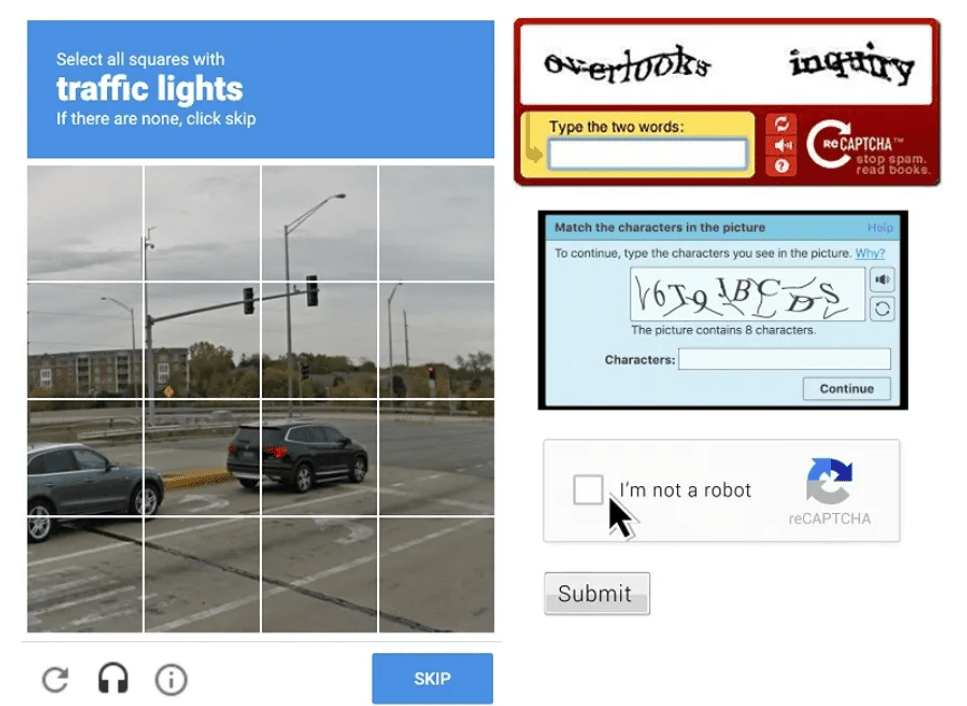
Fake Captcha pages look harmless — routine browser checks asking users to “verify” they’re human — but behind that familiar friction, attackers have quietly transformed trusted web workflows into a scalable malware delivery interface.
Recent analysis by Censys researchers shows that what once appeared to be a single, coordinated campaign is better understood as a fragmented ecosystem that lives off the web itself, inheriting trust rather than stealing it.
“Living Off the Web does not replace traditional lures or brand impersonation. It compounds them,” said Andrew Northern, principal security researcher at Censys in an email to eSecurityPlanet.
He added, “Threat actors still use trusted names and convincing pretexts, but increasingly they converge on abusing the mechanics of everyday internet use itself. CAPTCHAs, browser notifications, update prompts, and verification flows have become shared delivery surfaces because users are conditioned to interact with them to get things done.”
Andrew also explained, “This convergence spans diverse actors, toolchains, and objectives, signaling a broader shift that has been unfolding for years, from fake software updates to today’s web-native delivery interfaces.”
How Fake Captcha Exploits Conditioned User Behavior
Fake Captcha has become a durable fixture in web-based attacks because it exploits one of the hardest things for defenders to control: conditioned user behavior.
Verification prompts, browser checks, and security interstitials are now routine parts of everyday browsing, and attackers are capitalizing on that familiarity to steer victims into execution paths that sidestep traditional detection.
An internet-wide analysis of nearly 9,500 Fake Captcha endpoints tracked through the Censys Threat Hunting Module underscores how misleading appearance alone can be.
Although many of these pages look nearly identical — often mimicking Cloudflare-style verification challenges — they conceal fundamentally different delivery mechanisms behind the interface.
This evolution complicates attribution, detection, and response. A familiar-looking lure no longer signals a familiar threat, forcing defenders to rethink how trust and risk are assessed on the web.
How Fake Captcha Masks Diverse Attack Paths
At first glance, Fake Captcha activity appears tightly coordinated. Perceptual hashing across thousands of pages reveals a single dominant visual cluster representing roughly 70% of observed activity.
These pages share the same layout, language, and interaction flow, often incorporating site-specific favicons to reinforce a sense of legitimacy.
That uniformity, however, is only skin deep.
Behind the interface, researchers identified more than 30 distinct payload variants and several incompatible execution models operating under the same visual design.
Some Fake Captcha pages rely on clipboard-driven execution, instructing users to paste and run PowerShell or VBScript commands that retrieve additional malware.
Others deliver payloads through Windows Installer packages, bypassing scripting engines altogether.
More strikingly, a significant subset exposes no client-side payload at all.
Instead, these pages hand off control to server-driven frameworks such as Matrix Push C2, where the initial interaction serves only to secure browser notification permissions.
Delivery is delayed, fileless, and mediated entirely through trusted browser functionality.
In these cases, the absence of a payload is not a gap in detection — it is the technique.
When Fake Captcha Breaks Traditional Detection
Traditional ClickFix lures rely on explicit user execution and typically leave behind artifacts that defenders can analyze.
Matrix Push–style delivery upends that model. In these cases, the Fake Captcha page functions as a conversion step rather than a payload prompt.
Once notification permissions are granted, attackers can deliver malicious content later, on their own schedule.
From a static analysis standpoint, these pages may appear harmless. Clipboard inspection produces nothing, and HTML analysis reveals no obvious malware. Yet the critical trust boundary has already been crossed.
This is the key insight: Fake Captcha has effectively separated the interface layer from execution.
The same familiar-looking lure can front clipboard-based scripts, MSI installers, or fully server-controlled, fileless delivery paths.
As a result, visual similarity is easy to replicate and increasingly unreliable for attribution or threat assessment.
Mitigating Fake Captcha and Trust-Based Attacks
As Fake Captcha attacks continue to evolve, organizations need defenses that extend beyond traditional payload and malware detection.
These threats abuse trusted web workflows and user interactions, allowing malicious activity to unfold without obvious execution artifacts.
Effective mitigation requires shifting focus to browser behavior, execution controls, and the handoff between user interaction and downstream activity.
- Monitor for security-themed verification pages appearing outside expected contexts and flag repeated “browser check” or “human verification” flows tied to unrelated infrastructure.
- Restrict browser notification permissions by default and closely monitor notification opt-ins that immediately follow verification or security prompts.
- Correlate browser interactions (e.g., clipboard access, permission grants, service worker registration) with downstream endpoint and network activity rather than relying solely on payload artifacts.
- Harden execution controls by limiting scripting engines, restricting MSI installation, and enforcing application allowlisting where possible.
- Reduce exposure by enforcing least privilege, removing local install rights, and applying stronger controls to high-risk user groups.
- Strengthen detection and awareness by training users to recognize fake verification workflows and by logging and alerting on abnormal browser-initiated behavior.
Collectively, these steps help reduce exposure and detect Fake Captcha–driven attacks earlier in the kill chain.
Trusted Web Interfaces Are Now Targets
Fake Captcha illustrates a broader shift in how modern attacks operate, where trust in everyday web interactions has become the delivery mechanism itself.
As attackers continue to exploit familiar verification workflows and browser behaviors, defenders can no longer rely on visual cues or traditional payload-based detection alone.
Instead, security teams must treat trusted web interfaces as a primary attack surface and design controls that account for delayed, fileless, and server-driven delivery models.
As trust itself becomes the attack vector, zero-trust principles offer a natural next step for rethinking how access, behavior, and risk should be evaluated across the enterprise.
