

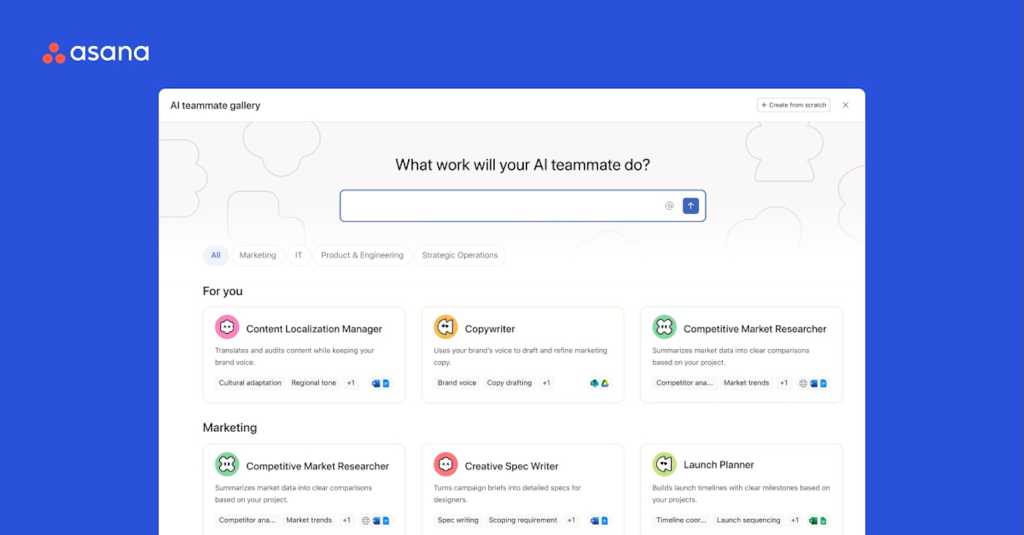

Unlike standalone AI assistants, Asana’s AI teammates operate within shared workflows, with access to projects and portfolios across the platform, Bose said. Users can assign tasks to an agent, review its output, and provide feedback. An auditable record of prompts and actions carried out by the agent is then available to all co-workers.
The collaborative approach leads to greater transparency around information generated by agents, said Bose. “As you train the AI agent and get more work done within Asana, all of that reinforced learning is shared with the human beings with access to the same agent,” he said. “You’re getting institutional memory; you’re not just getting individual memory and individual productivity boost.”
Connecting to third-party apps
AI teammates are also able to connect to third-party applications via “a bi-directional sync” to retrieve data and take actions such as creating new documents, Bose said. Currently this means API connections to Google Drive and Microsoft 365 apps. Connectors to other business applications, such as HubSpot and Salesforce, are in development.
