

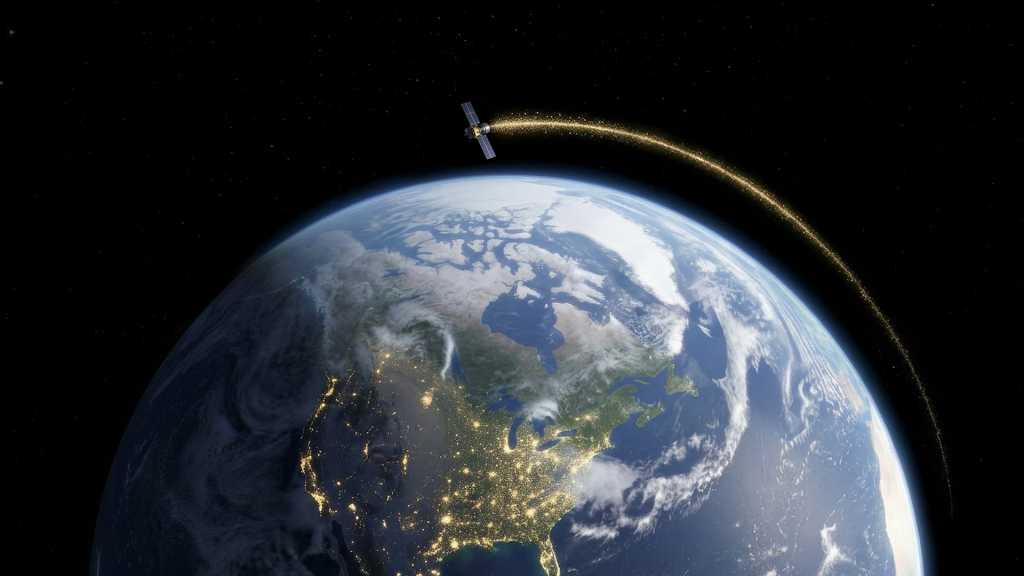

For example, instead of sending down raw image data, which can take hours, or even days, a satellite can transmit the information that, say, a particular bridge is down, or that a certain road is having issues—actionable information of immediate business value.
“AI can also help satellites navigate low earth orbit much more confidently, avoid other satellites, and operate much more autonomously,” says Su.
And it can be used for other heavy workloads as well. For example, Kepler Communications is using Jetson Orin in its satellite communication network. That helps the company make its satellites smarter, CEO Mina Mitry said in a statement, “allowing us to intelligently manage and route data across our constellation.”
The Jetson Orin is already bringing data center-level compute capability to space, Su says, and, with the new chips, there will be even more real-time capability for the next generation of satellites.
According to Gartner analyst Bill Ray, orbital data centers are a waste of time and money. “The rush to develop orbital data centers has reached a period of peak insanity,” he wrote in a recent report. “For all the hype around them, these space-based data centers will not be able to deliver on the promise of useful analysis of terrestrial data for terrestrial applications for decades, and may not ever be able to do so.”
But that’s not where today’s use cases are, Su points out. “It is edge computing workloads,” he says. “It’s AI inference for multi-dimensional data for disaster recovery and weather forecasting.”
